Business goal / Flexible menu
Multi-treatment Menu
Compare configurable light, RF and selected laser families around the services you intend to offer.
Decision frame
Define the workflow before the equipment.
A longer feature list does not automatically create a better clinic platform. Prioritise the treatment menu, patient volume, operator training and serviceability before comparing price.
Shortlist questions
Four answers that improve a quotation.
- 01
Which three treatment categories matter most?
- 02
Which functions must be dedicated rather than combined?
- 03
How will operator training be managed?
- 04
Which handpieces and consumables are included?
Decision guide
The short answer: build the menu on three real services
Write the three services you expect to sell most often, in order. Then choose the energy families that support those workflows. A configurable IPL or OPT platform can cover several light-based categories; RF can add a non-laser thermal route; a dedicated diode laser can protect capacity when hair reduction dominates. More functions are useful only when the team can assess, operate and support them.
Avoid beginning with the machine that carries the longest application list. That approach confuses platform capability with business readiness. Appointment demand, client mix, operator qualification, room time, consumables, downtime conversations and local device rules decide whether a menu works. The shortlist should make those constraints visible.
Decision guide
Separate shared hardware from shared competence
One console may offer several filters or handpieces, but every application still requires its own consultation logic, exclusions, protection, settings framework and aftercare. Ask the supplier to demonstrate each delivered function and identify which parts are optional. Training should name the exact configuration, not a family of visually similar models.
Create a competency matrix before launch: which operator is trained for which handpiece, which service requires clinical oversight, where a referral is needed and who manages an adverse event. This simple document often reveals that a narrower initial menu is safer and easier to sell than a crowded one. You can add capacity later when demand and competence justify it.
Decision guide
Decide when a dedicated platform earns its space
Dedicated equipment makes sense when one category has enough volume to justify a focused room workflow. Hair reduction is the clearest example: an 808nm diode system can give the team one handpiece and a narrower operating path, while the configurable light platform remains available for other services. Redundancy may also reduce disruption if one console is being serviced.
Fractional CO₂ and Q-switched Nd:YAG are other examples where mechanism and delivery differ enough to deserve their own comparison. Do not ask a general IPL or RF platform to stand in for them because the marketing categories overlap. Choose the technology that fits the intended tissue interaction and professional workflow, then verify the exact model.
Decision guide
Calculate room capacity and recurring cost
For each proposed service, estimate appointment length, preparation, cleaning, turnover and follow-up. Add operator time and the number of simultaneous rooms. A machine that appears flexible may become a bottleneck if every service depends on the same handpiece or if changeover and cooling recovery take longer than expected. Ask to see a full workflow, not only the energy firing.
List lamps, tips, filters, liners, coupling products, water filters and other routine items by platform. Request replacement price and lead time. Add freight responsibility and the expected process for faults. Ownership cost is the combination of consumables, scheduled care and lost room time, not simply purchase price divided by the number of functions.
Decision guide
Use one comparison sheet for every supplier
Normalize quotations by recording model, energy source, delivered handpieces, filters or applicators, adjustable ranges, cooling, electrical version, startup accessories, consumables, training, current documents, warranty and support route. Mark every claim as documented, demonstrated or still unverified. This removes much of the noise created by differently formatted brochures.
Ask the supplier to correct gaps in writing. If a feature is central to your menu, it must appear in the configuration list. If a certificate is central to market entry, it must cover the current manufacturer and model. If a response time matters, put it in the service terms. A friendly call is useful; a checkable purchase record is better.
Decision guide
Launch in stages and measure what happens
Start with the services the team can deliver confidently. Track inquiries, bookings, completed courses, consumable use, room time, maintenance events and reasons clients do not proceed. Those measures show whether the next investment should add capacity, add a new mechanism or improve support for the equipment already installed.
Keep public claims within current documents and local rules. Do not turn historical certificates, archive specifications or a study of another device into a promise for the delivered unit. A staged launch gives you time to refine consultation, pricing and staff competence without forcing every possible application into the first month.
Procurement checklist
Questions to put in writing.
- Rank the three highest-priority services and expected weekly demand
- Map each service to a distinct energy mechanism and operator competency
- Decide which high-volume category deserves dedicated equipment
- Record every delivered handpiece, filter, applicator and startup accessory
- Calculate consumables, maintenance, replacement lead time and downtime
- Verify current model documents, training and support terms in writing
Candidate platforms
Open the product comparison.
- OPT & IPL Platform — Configurable light-based platforms for buyers building a broader treatment menu.
- RF Skin Tightening — A non-laser energy family for buyers comparing thermal skin platforms.
- 808nm Diode Laser — A single-wavelength platform documented for professional hair-reduction workflows.
Frequently asked questions
FAQIs a multi-function platform always better value?
No. Value depends on demand, training, handpiece availability, recurring cost and room capacity. Functions that the team cannot confidently sell or operate add complexity without adding useful revenue.
When should hair reduction have a dedicated diode system?
Consider it when hair reduction is a core, high-volume service and sharing an IPL platform would constrain scheduling or complicate the workflow. Verify the diode handpiece, cooling and service plan rather than choosing by wavelength alone.
How many services should launch at once?
Launch the services for which assessment, training, consent, protection, cleaning and follow-up are ready. A staged menu is often easier to operate and measure than every advertised application on day one.
How do we compare proposals with different feature lists?
Use one normalized sheet for configuration, accessories, ranges, consumables, training, documents, warranty and support. Mark each claim as documented, demonstrated or open. Compare only after the gaps are clear.
Evidence trail
Published research behind the comparison
This guide is educational material for equipment selection. It is not medical advice, an operating protocol or a promise of clinical outcome.
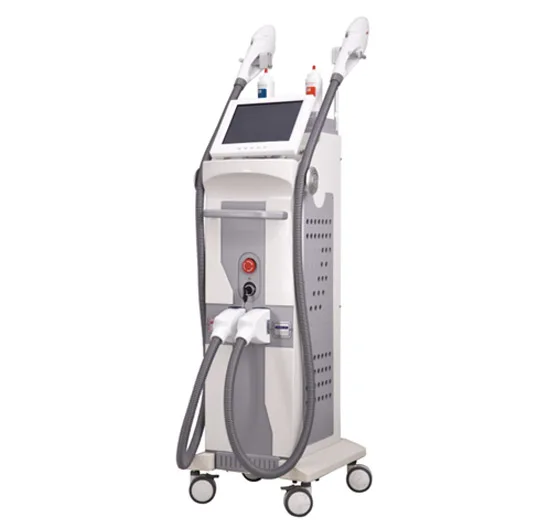
OPT & IPL Platform
Configurable light-based platforms for buyers building a broader treatment menu.
Broad-spectrum light↘05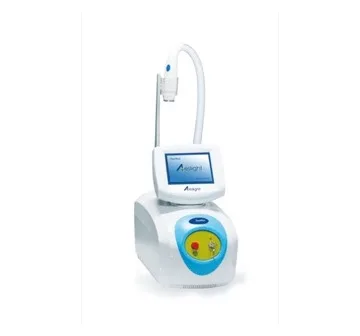
RF Skin Tightening
A non-laser energy family for buyers comparing thermal skin platforms.
Radio frequency↘01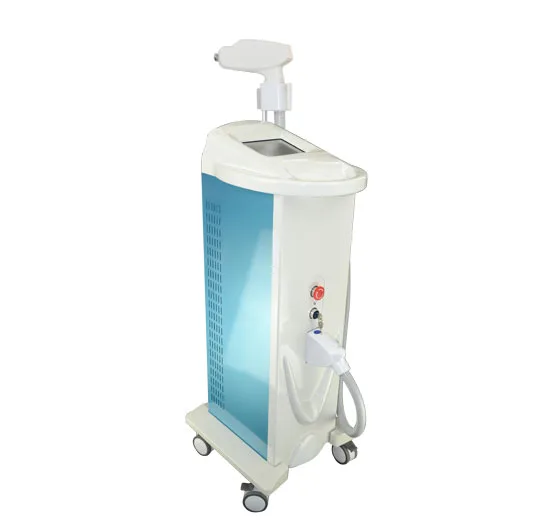
808nm Diode Laser
A single-wavelength platform documented for professional hair-reduction workflows.
808nm↘Next step
Compare current configurations for a multi-treatment menu workflow.
Tell us your priority services, market, client mix and business type. Ask for the exact configuration, documents, training and service terms you need.
Describe your equipment plan ↘